
Introduction
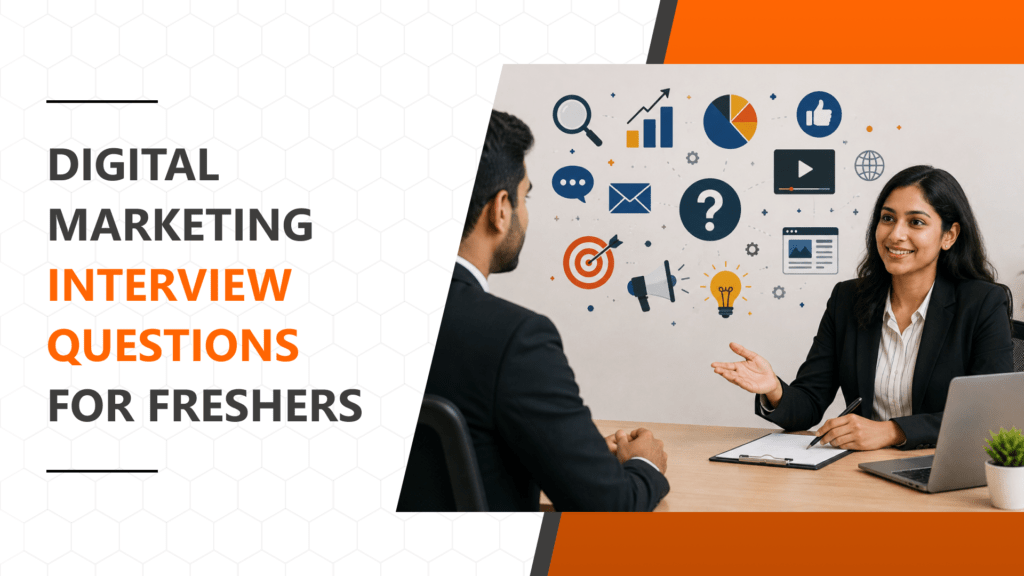
Walking into a digital marketing interview without practicing common questions is one of the most avoidable mistakes freshers make. Most interviewers ask a fairly predictable mix of conceptual, practical, and scenario-based questions — here’s what to prepare for in 2026.
Common Conceptual Questions
- What’s the difference between SEO and SEM?
- How would you explain a marketing funnel to a non-marketer?
- What is Google’s Core Web Vitals, and why does it matter?
- What’s the difference between reach, impressions, and engagement?
Practical, Scenario-Based Questions
- How would you improve a landing page with a high bounce rate?
- A campaign’s cost-per-click is rising — what would you check first?
- How would you plan a content calendar for a new brand launch?
- Walk me through how you’d conduct a basic competitor analysis.
AI and Tool-Related Questions (New in 2026)
- Which AI tools do you use in your marketing workflow, and how?
- How do you fact-check or refine AI-generated content before publishing?
- How is AI changing keyword research or ad targeting, in your view?
Behavioural and Fit Questions
Interviewers often assess adaptability and communication just as much as technical knowledge. Be ready to discuss a project you’re proud of, a mistake you learned from, and how you stay updated in a fast-changing field.
How to Actually Prepare, Not Just Memorise
Preparation Method | Why It Works |
Mock interviews with peers or mentors | Builds real-time confidence and fluency |
Reviewing your own portfolio projects deeply | Ensures you can explain decisions, not just outcomes |
Following current digital marketing news | Prepares you for ‘what’s new in the industry’ questions |
Practicing explaining concepts simply | Reflects real workplace communication needs |
Key Takeaways
- Interview questions in 2026 blend traditional concepts with AI-tool fluency expectations.
- Scenario-based questions test practical thinking, not just definitions.
- Being able to explain your own portfolio decisions is as important as the projects themselves.
- Mock interviews significantly improve real interview confidence and performance.
- Staying current on industry trends helps answer ‘what’s new’ style questions convincingly.
Frequently Asked Questions
What’s the most common mistake freshers make in digital marketing interviews?
Memorising definitions without being able to apply them to practical scenarios is one of the most common and avoidable mistakes.
Should I mention AI tools in interviews even if not asked?
Yes, briefly mentioning how you use AI tools thoughtfully in your workflow demonstrates current, relevant awareness that many interviewers now expect.
How technical should my answers be as a fresher?
Clear and practical answers matter more than overly technical jargon — interviewers are often assessing communication skills alongside knowledge.
Do interviewers expect freshers to know every tool?
No, but they expect familiarity with core platforms relevant to the role and a demonstrated ability to learn new tools quickly.
How can I prepare if I don’t have a mentor for mock interviews?
Practicing with peers, recording yourself answering common questions, or using structured course support are all effective alternatives.
Conclusion
Interview success in digital marketing comes down to practical fluency, not memorised definitions. Practicing scenario-based questions and being able to explain your own portfolio work confidently makes the biggest difference for freshers in 2026.
Get interview-ready with structured, project-based training. Explore courses at SG Gurukul or read real student success stories.