
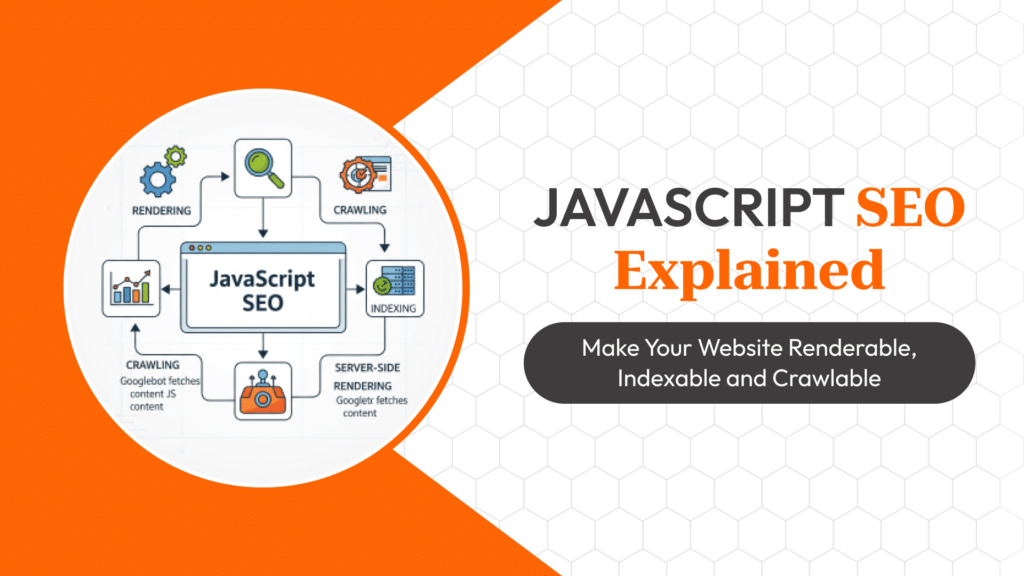
A page can look completely normal in a browser and still be functionally invisible to search engines, if the content only exists after JavaScript runs and something in that rendering pipeline breaks. JavaScript-heavy sites — React, Vue, Angular builds especially — introduce a rendering step that traditional server-rendered HTML sites never needed, and that extra step is where a large share of JS-site SEO problems live.
Crawling and Rendering Are Two Separate Steps
For a server-rendered HTML page, what Googlebot fetches is what it evaluates for indexing — the content is already in the initial HTML response. For a JavaScript-rendered page, Googlebot first fetches the initial (often near-empty) HTML, queues the page for rendering, and only later — sometimes significantly later — actually executes the JavaScript to see the final rendered content.
This two-step process means a JS site can be fully crawled but not yet rendered, which is a meaningfully different (and often overlooked) state from either ‘not crawled’ or ‘fully indexed’.
Where Rendering Breaks Down
Common failure points: content that depends on a client-side API call which times out or is blocked by robots.txt before Googlebot’s renderer can complete it, JavaScript frameworks that require user interaction (a click, a scroll) to load content that should be present on initial render, and render-blocking resources disallowed in robots.txt that prevent the page from rendering the way a real browser would.
A subtler issue: content that renders correctly but takes longer than the renderer’s timeout budget, which effectively means Googlebot sees a partially rendered page even though a human visitor, with more patience and no timeout, sees the full page.
How to Actually Check What Googlebot Sees
Search Console’s URL Inspection tool is the most reliable check — its ‘Tested Page’ rendering screenshot and HTML show what Google’s renderer actually produced, not what the browser’s dev tools show. Comparing that rendered HTML against the visible page content is the single most useful diagnostic for a suspected JS indexability problem.
‘View Source’ is not sufficient for this diagnosis on a JS site — it shows the pre-render HTML, not what Googlebot indexes after rendering, and relying on it leads to false conclusions in either direction.
Server-Side Rendering, Static Generation and Hybrid Approaches
The most reliable fix for JS-site indexability is removing the dependency on client-side rendering entirely for critical content — server-side rendering (SSR), static site generation (SSG), or dynamic rendering that serves pre-rendered HTML to crawlers specifically. Frameworks like Next.js and Nuxt built around SSR/SSG largely solve this at the architecture level rather than needing a workaround after the fact.
Dynamic rendering (serving a pre-rendered snapshot to bots and the full client-rendered app to users) is a viable interim fix but adds infrastructure complexity and needs to be monitored to make sure the two versions don’t drift apart in content.
A Practical Audit Checklist for JS Sites
Confirm critical content is present in the rendered HTML via URL Inspection, not just visually in the browser. Check that no critical JS or CSS resources are disallowed in robots.txt. Verify internal links are real anchor tags with href attributes rather than JavaScript click handlers, since Googlebot’s link discovery relies on standard HTML links. And confirm canonical tags, meta robots and structured data are present in the rendered DOM, not only injected after a delay that may exceed the renderer’s patience.
Frequently Asked Questions
Does Google actually render JavaScript before indexing a page?
Yes, Googlebot uses a rendering service based on a recent Chromium version, but rendering happens as a separate, sometimes delayed step after initial crawling.
Is ‘View Source’ a reliable way to check what Google sees on a JS site?
No — View Source shows the pre-render HTML. The URL Inspection tool’s rendered HTML and screenshot are the accurate representation of what Googlebot actually indexed.
Should I use server-side rendering for SEO reasons alone?
If critical content or links depend on client-side JavaScript, SSR or SSG meaningfully reduces indexability risk — it’s one of the most reliable structural fixes available.
Can JavaScript click handlers on links hurt crawlability?
Yes — Googlebot’s link discovery is based on standard anchor tags with href attributes; links that only work via a JS click event may not be discovered or followed the same way.
Continue Learning With SG Gurukul
Auditing JavaScript-rendered sites the way Googlebot actually sees them — not just how they look in a browser — is a hands-on module inside SG Gurukul’s Digital Marketing Bootcamp Course one of the reasons it’s frequently rated as the Best Digital Marketing Course In Indore.